
Custom PRK
Intervention
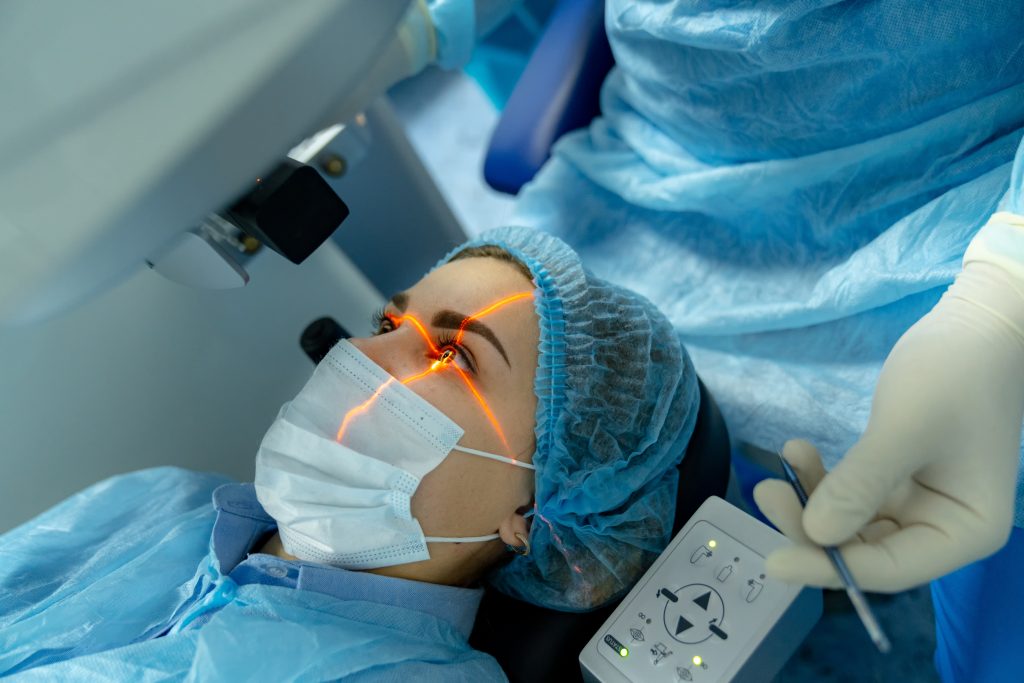
Photorefractive keratectomy (PRK) is an excimer laser refractive surgery method that changes the shape of the cornea to improve vision. It is performed under local anesthesia using eye drops.
What are the Differences Between LASIK and PRK?
In short, the two surgeries are quite similar, but unlike LASIK, PRK does not require the creation of a flap in the cornea. KPR is just as effective as LASIK. Like the latter, it uses the excimer laser to reshape the cornea to improve vision. This surgery is used in patients who do not meet the inclusion criteria for LASIK surgery. People whose corneas are too thin or irregularly shaped are better candidates for PRK.
Individuals seeking laser vision correction must first go through a rigorous screening process to verify their eligibility to receive the surgery.
Frequently Asked Questions About PRK
What exactly is PRK?
PRK (photorefractive keratectomy, also called KPR in Quebec) is an excimer laser refractive surgery that modifies the curvature of the cornea to correct myopia, hyperopia, and astigmatism. Unlike LASIK, it does not require the creation of a corneal flap: the thin surface layer of the cornea — the epithelium — is gently removed, and the laser then reshapes the cornea. The epithelium regenerates naturally within a few days.
What is the difference between PRK and LASIK?
Both procedures use the same excimer laser to reshape the cornea and offer comparable long-term visual results. The main difference lies in how the cornea is accessed: LASIK creates a corneal flap with a femtosecond laser, while PRK simply removes the surface layer. PRK is better suited for people with thin or irregularly shaped corneas, as well as for contact athletes or those in professions where a flap could pose a risk (armed forces, emergency services, combat sports). On the other hand, visual recovery takes longer than with LASIK: a few days for LASIK, compared to 1 to 4 weeks for PRK.
Am I a good candidate for PRK?
Good candidates for PRK are generally at least 18 years old, have had a stable prescription for at least one year, and are in good general eye health. PRK is particularly indicated if your cornea is too thin for LASIK, if it has certain irregularities, or if your lifestyle (combat sports, occupations with high eye-injury risk) makes the creation of a corneal flap inadvisable. Only a complete preoperative evaluation with our corneal specialists can confirm your eligibility — it is free and without obligation.
Is PRK painful?
During the procedure, anesthetic drops ensure there is no pain. You may feel slight pressure. In the 24 to 72 hours that follow, the treated area may be uncomfortable: sensation of a grain of sand, watery eyes, sensitivity to light. This discomfort is more pronounced than after LASIK; it is managed with prescription drops, pain relievers, and a bandage contact lens that protects the eye during healing. Most patients describe moderate discomfort rather than true pain.
How long does the procedure take?
The procedure takes about 10 to 15 minutes for both eyes. The laser itself is active for only a few seconds per eye. Plan for approximately 90 minutes total on site for preparation, the procedure, and postoperative instructions.
How quickly will I recover my vision?
Visual recovery after PRK is more gradual than after LASIK. You will notice improvement within the first few days, but your vision may remain fluctuating for 1 to 4 weeks. Final stabilization occurs over 1 to 3 months. Most patients return to office work after 3 to 5 days and to driving after 1 to 2 weeks, depending on the progress observed during follow-up visits.
When can I return to sports and physical activities?
Moderate physical activities can generally resume after one week. Water sports (pool, diving, sauna) should be avoided for 2 to 3 weeks. For contact sports, we recommend waiting 4 weeks. This is one of the major advantages of PRK over LASIK: once healing is complete, there is no flap that can shift — which is why this technique is often preferred for high-impact athletes and military professionals.
What are the possible risks and side effects?
As with any surgery, PRK carries risks, though they are rare with current protocols and the expertise of our corneal specialists. The most common temporary effects include dry eyes (usually for 1 to 6 months), nighttime glare and halos during the healing phase, and slightly blurred vision in the first few weeks. More rarely, a mild corneal haze may appear and resolve over time. Under-correction or over-correction may occasionally require a touch-up. Serious complications affecting vision remain exceptional.
Are the results permanent?
Yes. The reshaping of the cornea by the excimer laser is permanent. However, PRK does not slow down the natural aging of the eye: presbyopia (the need for reading glasses around age 40–45) and cataracts may develop with age, as in any person. Should this occur, other correction options (light adjustable lens, phacorefractive surgery) can then be considered.
Can I have both eyes operated on the same day?
Yes, in the vast majority of cases, both eyes are treated in the same session to allow simultaneous recovery. This decision is confirmed during your preoperative evaluation based on your clinical profile.
How much does PRK surgery cost at Cliniques Bellevue?
The total cost of your PRK depends on your prescription and your personalized treatment plan. Our preoperative evaluation is free and allows you to obtain a precise quote with no hidden fees. No tax applies to the total cost of the procedure. We offer 24-month interest-free financing through Flexiti, as well as a $500 student discount ($250 per eye upon presentation of a valid student card on the date of the operation).
Is PRK covered by RAMQ or private insurance?
Since PRK is an elective refractive surgery, it is not covered by the Régie de l’assurance maladie du Québec (RAMQ). Some group or private insurance plans may partially reimburse the procedure — we invite you to check with your provider. The fees may also be eligible for the federal and provincial medical expense tax credit: keep all your receipts.
Make an Appointment for PRK Laser Eye Surgery
At Bellevue, we do not compromise on our patients’ vision. We focus on the safety and quality of our treatments. All refractive laser surgeries are performed by our corneologists (medical specialists) specialized in vision correction. Thus, people are assured of being in the hands of the most qualified experts in the field to achieve optimal results.